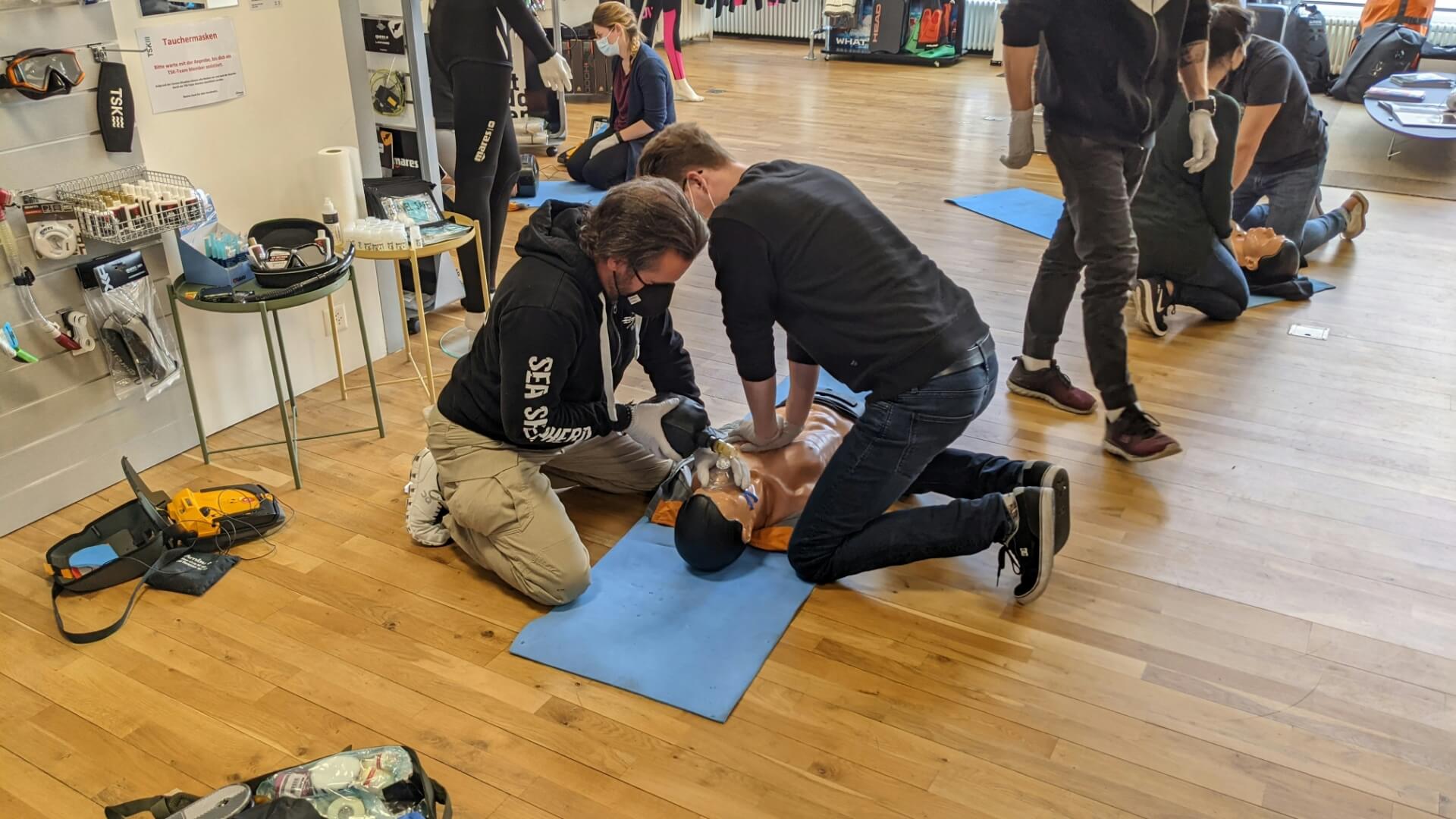

A first aid kit on the wall is a start, but it’s only a tool. The most valuable part of any safety plan is the person who knows how to use it. In an emergency, hesitation can be costly, and confidence comes from hands-on workplace first aid training. Fulfilling the cpr certification for workplace requirements isn’t just about compliance; it transforms your employees from bystanders into capable responders. A corporate first aid certification gives them the skills to act decisively when seconds count. This guide will walk you through building a team that is prepared, empowered, and ready to protect one another.
Key Takeaways
- Think Beyond the Checklist: A first aid program does more than satisfy OSHA rules; it builds a culture of safety. Proper training reduces company liability and gives your team the confidence to handle emergencies effectively.
- Match the Training to the Job: Choose a course that addresses the real risks your employees face. A corporate office has different needs than a construction site, so select training that provides relevant, practical skills for your specific environment.
- Make Preparedness a Habit: Certification is just the beginning. Create a complete safety system by developing a clear emergency plan, tracking renewal dates, and encouraging regular skills practice to ensure your team is always ready to respond.
What Is Workplace First Aid Certification?
Workplace first aid certification is a hands-on training program that gives your employees the skills and confidence to respond effectively during a medical emergency. Think of it as a critical part of your company’s safety net. When someone is certified, it means they’ve been professionally trained to handle common injuries and life-threatening situations, from cuts and burns to cardiac arrest. A comprehensive CPR, AED, and First Aid course is the foundation of any strong workplace safety plan.
This isn’t just about checking a box for compliance. It’s about creating a culture of preparedness where team members feel empowered to act decisively when seconds count. When an incident occurs, a trained responder knows how to assess the scene, provide immediate care, and bridge the crucial gap until professional medical help arrives. By investing in this training, you’re not just protecting your employees; you’re showing them you value their well-being. It transforms bystanders into capable first responders, building a safer environment for everyone.
Which First Aid Training Is Right for Your Team?
Not all first aid training is the same, and you can choose a course that fits your team’s specific needs. While a combined course is often the best value, you can also find more specialized options. The most common types of workforce training include:
- First Aid/CPR/AED: This is the all-in-one standard for most workplaces. It covers everything from treating wounds and burns to performing CPR and using an automated external defibrillator (AED).
- Pediatric First Aid/CPR/AED: If your business serves children, like a school or daycare, this certification is essential. It focuses on techniques specific to infants and children.
- Bloodborne Pathogens: This training is crucial for any role with potential exposure to blood or other infectious materials. It teaches employees how to protect themselves and others from disease transmission.
Who on Your Team Needs to Be Certified?
The simple answer is: as many people as possible. While some regulations might require a certain number of certified responders based on your industry or company size, relying on just one or two people is a risky strategy. What if the designated person is out sick, on vacation, or the one who needs help? The more people on your team who are trained, the better the odds that someone will be nearby and ready to act immediately.
For higher-risk environments like manufacturing or construction, or in any workplace with a large number of employees, having a broad base of certified staff is even more critical. When you make safety training a company-wide initiative, you build a resilient team that can handle emergencies with confidence, no matter who is on shift.
Why Workplace First Aid Is a Must-Have
Having a first aid program is about more than just checking a compliance box. It’s a core part of building a safe, responsible, and supportive work environment. When an emergency happens, every second counts, and a trained responder can make the difference between a close call and a tragedy. Investing in first aid certification shows your team that you genuinely care about their well-being, both on and off the clock.
Beyond the immediate benefit of having life-saving skills on-site, a certified team brings three major advantages to your organization. First, it ensures you meet critical regulatory standards, protecting your business from fines and penalties. Second, it significantly reduces the risk of workplace injuries escalating, which in turn limits your liability. Finally, and perhaps most importantly, it empowers your employees with the confidence to act decisively in a crisis, fostering a stronger and more resilient company culture. Let’s look at each of these benefits more closely.
The Life-Saving Impact of Immediate CPR
When a person goes into sudden cardiac arrest, the first few minutes are the most critical. The reality is that professional medical help is rarely instantaneous. This is where a trained coworker becomes the most important person in the room. According to safety experts, performing immediate CPR can double or triple a person’s chance of survival. A certified employee acts as a vital bridge, providing life-sustaining care in the gap between when an emergency occurs and when paramedics arrive. By keeping oxygenated blood flowing to the brain and other organs, they give their colleague a fighting chance. This single skill transforms a workplace from a collection of bystanders into a team of capable first responders, ready to protect one another when it matters most.
Stay Compliant with OSHA and ANSI Standards
First things first: let’s talk about the rules. The Occupational Safety and Health Administration (OSHA) has clear requirements for workplace safety. Specifically, OSHA standard 1910.151 states that if your workplace isn’t in “near proximity” to a hospital or clinic, you must have employees on-site who are adequately trained to provide first aid.
Meeting these standards isn’t just about avoiding penalties. It’s about establishing a foundational commitment to safety. Following OSHA and ANSI guidelines ensures your first aid program is effective, up-to-date, and legally sound. A certified training program covers the essential skills required for compliance, giving you peace of mind that your team is prepared and your business is protected.
Understanding OSHA’s Response Time Requirements
So, what does OSHA mean by “near proximity” to medical care? While the term sounds vague, the general guideline is a response time of about three to four minutes. If an ambulance or emergency services can’t reliably reach your worksite within that window, you are required to have trained first-aid providers on staff. For most businesses, this is a clear signal that on-site responders are necessary. Think about your location—are you in a remote area, a dense urban environment with heavy traffic, or on a large campus? Any of these factors can delay professional help, making your trained employees the true first responders.
Required Training for High-Risk Industries
For some jobs, first aid and CPR training isn’t optional, regardless of how close the nearest hospital is. Industries with inherent dangers have stricter safety mandates because the risk of serious injury is so much higher. According to OSHA, this includes roles like electrical workers, logging crews, and teams working in confined spaces or with hazardous materials. In these environments, a specific injury like electrocution or chemical exposure requires immediate and knowledgeable intervention. The training for these teams must match the risks they face daily, ensuring they can act correctly and without hesitation when it matters most.
Formally Designating First-Aid Responders
A successful safety program relies on clarity, which is why many companies need to formally assign employees as “designated first-aid responders.” This isn’t just about asking for volunteers; it’s an official role within your company’s emergency plan. By designating specific people, you ensure there is always a clear line of responsibility. Everyone knows who to turn to in a crisis, and the responders themselves understand their duties. This structure eliminates confusion and hesitation during an emergency, allowing for a faster and more organized response when someone is injured or falls ill on the job.
Checking State-Specific Safety Laws
While federal OSHA regulations set the minimum standard, it’s important to remember that they are just the baseline. Many states operate their own occupational safety programs, which often have more stringent requirements. For example, some states specify a maximum response time for reaching an injured employee. It’s your responsibility as an employer to research your state’s specific laws to ensure you are fully compliant. A quick check with your state’s labor department can clarify any additional obligations you may have, helping you build a safety program that meets every legal requirement.
Keeping Records for Compliance
Getting your team certified is the first step, but maintaining those certifications is just as important for compliance. Most first aid and CPR certifications are valid for two years, and letting them lapse can put your company at risk. Create a simple system, like a shared calendar or spreadsheet, to track expiration dates and send renewal reminders. For businesses looking for a more streamlined approach, our sister company offers AED compliance management software that automates tracking for both training and equipment, ensuring your entire safety program stays current without the manual effort.
How Certification Reduces Injuries and Liability
A swift and correct response to an injury can prevent a minor situation from becoming a serious one. When employees are trained in first aid, they know how to properly assess an emergency, manage bleeding, perform CPR, and use an AED. This immediate care can stabilize a person’s condition until professional medical help arrives, drastically improving the outcome.
This preparedness also helps protect your business. Proper training minimizes the risk of someone making a mistake that could worsen an injury, which can be a major liability. By investing in a formal workplace safety program, you demonstrate a clear commitment to employee well-being. This proactive approach not only reduces the frequency and severity of incidents but also strengthens your company’s position by showing you’ve taken responsible steps to protect your team.
Empower Your Team to Respond with Confidence
An emergency can cause panic and confusion, but training replaces fear with confidence. When your employees are certified in first aid, they have the knowledge and skills to step up and take control of a stressful situation. This empowerment is invaluable. Instead of freezing, a trained team member knows exactly what to do, whether it’s calling 911 with clear information, starting CPR, or applying pressure to a wound.
This confidence creates a powerful ripple effect across your entire organization. It fosters a culture of safety where employees feel secure knowing their colleagues are prepared to help. It also builds teamwork and morale, as people learn to rely on each other in high-stakes moments. These are skills that extend far beyond the workplace, giving your team the ability to save a life anywhere, anytime.
How to Choose the Right First Aid Course
Choosing a first aid course for your team isn’t a one-size-fits-all decision. The right program goes beyond basic compliance and equips your employees with the specific skills they need to handle emergencies that could actually happen in your workplace. From office settings to construction sites, the risks vary, and so should the training. To build a truly effective safety program, you need to match the course curriculum to your industry’s unique environment and potential hazards. This ensures your team feels confident and prepared to act when it matters most.
The Essentials: First Aid, CPR, and AED
Every workplace first aid program should be built on a solid foundation of essential skills. This means covering the basics of first aid, CPR (Cardiopulmonary Resuscitation), and how to use an AED (Automated External Defibrillator). These are the core competencies that prepare your team to respond to the most common life-threatening emergencies, like sudden cardiac arrest or choking. The American Heart Association offers comprehensive training programs that teach employees how to recognize an emergency, act quickly, and perform these critical, life-saving techniques until professional help arrives. Think of these skills as the non-negotiable starting point for a safer workplace.
Beyond the Basics: Bloodborne Pathogen Training
If your employees could reasonably come into contact with blood or other potentially infectious materials, you need to go a step further with specialized training. This is especially important for roles in healthcare, childcare, housekeeping, or any job that involves handling contaminated items. A bloodborne pathogens course teaches your team how to protect themselves from exposure, what to do if an incident occurs, and how to properly clean and dispose of materials. Many providers offer flexible training options that fit different schedules, ensuring everyone understands the safety protocols required to prevent the spread of disease.
Advanced Skills for Serious Emergencies
For industries where the risk of severe injury is higher, such as manufacturing, construction, or agriculture, advanced training is critical. A traumatic injury can happen in an instant, and uncontrolled bleeding is a leading cause of preventable death. That’s where programs like “Stop the Bleed” come in. This specialized training teaches people how to recognize life-threatening bleeding and intervene with pressure, packing, and tourniquets. Equipping your team with these advanced skills empowers them to become immediate responders, giving a seriously injured colleague the best possible chance of survival before paramedics are on the scene.
Does Your Industry Need Custom Training?
The best first aid training is directly relevant to the environment where your team works. After all, the potential emergencies in a corporate office are very different from those on a factory floor. Look for a training provider that can tailor the course content to your specific industry and worksite hazards. A customized program ensures the scenarios and skills practiced are realistic for your team. The National Safety Council emphasizes that first aid training that meets OSHA standards can be adapted to address the unique challenges of different workplaces, making the learning more effective and memorable for everyone involved.
Where Can Your Team Get Certified?
Once you know what kind of training your team needs, the next step is finding a provider that fits your schedule, budget, and industry requirements. Several nationally recognized organizations offer workplace first aid certification, each with its own approach. The key is to choose an accredited program that gives your team the hands-on skills and confidence to act when it matters most. Let’s look at some of the top options available.
Training with CPR1.com
We specialize in creating confident first responders. Our CPR, AED, and First Aid course is a comprehensive, hands-on program designed for the workplace. In about five hours, your team will learn essential skills like high-quality CPR, choking relief, how to use an AED, and the importance of barrier devices. Our instructors, many with backgrounds as firefighters, paramedics, and nurses, bring real-world experience to every session. We focus on practical training that ensures your employees leave with the ability to respond effectively and calmly during an emergency.
Exploring American Heart Association Courses
The American Heart Association (AHA) is a leading name in cardiac care and offers a suite of training programs called Heartsaver®. These courses are specifically designed to prepare employees for emergencies in the workplace. The training covers critical incidents like heart attacks and other first aid situations, giving your team a solid foundation in emergency response. The AHA’s workforce training programs are widely recognized and provide a trusted certification option for businesses looking to meet compliance standards and protect their staff.
What the American Red Cross Offers for Workplaces
The American Red Cross provides a range of first aid courses tailored to different workplace risk levels. For businesses in higher-risk industries like manufacturing or construction, they offer an intensive First Aid at Work course that spans three days. This in-depth training is designed for new first aiders and covers a wide array of potential medical emergencies. The Red Cross is a globally recognized organization, and its certifications are a dependable way to ensure your designated responders are prepared for a variety of situations.
Comparing Other National Training Providers
Beyond these organizations, OSHA recognizes several other national providers that offer high-quality training. According to its guidelines on first aid programs, reputable training can be provided by institutions like the National Safety Council (NSC) in addition to the American Heart Association and American Red Cross. When choosing a provider, the most important factor is ensuring their curriculum is evidence-based and meets national standards. This guarantees your team receives training that is both effective and compliant with federal and state regulations.
Breaking Down the Cost of First Aid Certification
When you’re planning for workplace safety, the cost of training is naturally a key consideration. It’s helpful to think of first aid certification not as an expense, but as an investment in your team’s well-being and your company’s resilience. The price can vary depending on the provider, the depth of the course, and how you choose to schedule the training. A basic course covering First Aid, CPR, and AED use will have a different price point than more specialized training like Bloodborne Pathogens or Stop the Bleed.
The good news is that there are flexible options designed to fit different budgets and operational needs. Whether you’re certifying a single new hire or training an entire department, you can find a path that makes sense for your business. The most important thing is to choose a program that delivers high-quality, accredited training, because the confidence your team gains is priceless. Let’s break down the typical costs so you can plan your safety budget effectively.
How Much Does Individual Certification Cost?
If you or an employee needs to get certified individually, the cost is straightforward. A standard CPR, AED, and First Aid course typically covers essential skills like responding to choking, performing CPR, and using an automated external defibrillator. These comprehensive sessions usually last a few hours and are designed to be engaging and hands-on.
Once completed, the certification is generally valid for two years, offering a long-lasting return on a modest investment. The price for a single person ensures they have the skills and confidence to act decisively in an emergency. It’s a small price to pay for the ability to save a life at work, at home, or in the community.
How Group Rates Can Save You Money
Training your entire team at once is the most efficient and cost-effective way to build a culture of safety. Most training providers offer significant group discounts that make certifying your staff more affordable than sending them out one by one. By scheduling an onsite training session, you not only save money but also ensure your whole team receives the exact same instruction, tailored to your specific work environment.
This approach simplifies logistics, minimizes disruption to your operations, and fosters teamwork. When everyone learns together, they build the shared confidence needed to respond as a coordinated unit during an emergency. It’s a smart financial decision that strengthens your company’s emergency preparedness from the ground up.
Onsite vs. Online: Comparing the Costs
You have a few different formats to choose from, each with its own cost structure. Fully in-person, onsite training provides the most hands-on experience, with an instructor guiding your team through real-world scenarios. While this can be a larger initial investment, the practical skills and team-building benefits are invaluable.
A more flexible and often budget-friendly option is a blended learning course. With this model, your team completes the knowledge portion online at their own pace. Then, they attend a shorter, in-person session to practice the hands-on skills with an instructor. This hybrid approach reduces time away from work and can lower overall costs while still ensuring everyone masters the physical techniques required to save a life.
How to Choose the Right Training Provider
Once you know what kind of training your team needs, the next step is finding the right partner to provide it. Not all first aid programs are created equal, and your choice will determine how confident and capable your employees feel in an emergency. A great training provider does more than just check a compliance box; they empower your team with life-saving skills. Look for a partner that offers experienced instructors, accredited courses, and a format that fits your business operations.
Why Real-World Instructor Experience Matters
The best person to teach you how to respond in an emergency is someone who has actually done it. Instructors with backgrounds as paramedics, firefighters, or nurses bring a level of realism and practical wisdom that you just can’t get from a textbook. They can answer tough questions, share real-world examples, and help your team build the confidence to act decisively under pressure. When vetting organizations that offer first aid training, ask about their instructors’ backgrounds. A provider that prioritizes hiring first responders and healthcare professionals is investing in a higher quality of education for your team.
How to Check if a Course is Accredited
A first aid certificate is only useful if it’s officially recognized. To ensure your training meets federal and state requirements, choose a provider whose courses are accredited and align with national standards. Reputable programs will offer training that meets OSHA Standard 29 CFR 1910.151 and follows the latest CPR and first aid guidelines. This guarantees that the skills your team learns are not only effective but also keep your business compliant. Always confirm that the certification you’re paying for will be accepted by regulatory bodies in your industry.
Verifying Hands-On Skills Training for OSHA Compliance
When it comes to compliance, watching a video just won’t cut it. OSHA requires that employees are adequately trained to provide first aid, and that means having practical, hands-on skills. This is why a course that’s entirely online typically won’t meet OSHA requirements, as it lacks the essential in-person practice. A popular and compliant solution is a blended learning format, which combines online theory with a hands-on skills session. During this session, an instructor guides your team through the physical motions of performing CPR, using an AED, and managing injuries. This practical component is non-negotiable—it’s what builds the muscle memory and confidence needed to act effectively in a real emergency.
Finding a Program That Fits Your Schedule
Your business is busy, and scheduling training for the whole team can be a challenge. The right provider will offer flexible options that work for you. Onsite group training is a fantastic way to get everyone certified at once in a familiar environment. For teams with remote workers or staggered schedules, online or blended learning can be a perfect fit. Blended courses often combine self-paced online modules with a brief, in-person skills session, giving you the best of both worlds: convenience and hands-on practice. Look for a partner who is willing to adapt to your company’s unique needs.
What Skills Will Your Team Actually Learn?
A first aid certificate is more than just a piece of paper for your compliance files. It represents a set of practical, life-saving skills that empower your team to act decisively when it matters most. When an emergency happens, hesitation can make all the difference. Proper training replaces that uncertainty with a clear, step-by-step plan of action. Your employees won’t just learn what to do; they’ll build the confidence to do it correctly under pressure.
From handling a sudden cardiac arrest to managing a serious cut from a piece of equipment, the skills learned in a workplace first aid course are tangible and immediately applicable. This training prepares your team to be the true first responders, providing critical care in the minutes before professional help arrives. Let’s look at the core competencies your team will walk away with after completing their certification.
Learning Lifesaving CPR and AED Skills
When someone suffers a sudden cardiac arrest, every second counts. This is why mastering CPR and AED use is a cornerstone of any workplace first aid program. Your team will learn the correct techniques for high-quality chest compressions and rescue breaths for adults, children, and infants. Through hands-on training, they’ll practice these skills until they become second nature. The course also demystifies the Automated External Defibrillator (AED), a device designed for anyone to use. Your employees will learn how to operate an AED confidently, following its simple voice prompts to deliver a shock that can restart a heart. They’ll also learn how to respond to choking emergencies, a critical skill in any environment.
How to Control Bleeding and Treat Wounds
Workplace accidents can often result in injuries that involve bleeding. A certified first aid course teaches your team how to manage everything from minor cuts to life-threatening hemorrhages. They will learn essential techniques for controlling severe bleeding, including how to apply direct pressure correctly and use dressings and bandages effectively. For more extreme situations, they’ll understand when and how to apply a tourniquet, a skill taught in specialized courses like Stop the Bleed. This training also covers how to properly clean and care for smaller wounds to prevent infection, as well as how to respond to other common injuries like burns and sprains. This knowledge ensures your team can handle a wide range of incidents calmly and competently.
How to Assess an Emergency and Respond Calmly
One of the most valuable skills your team will learn is how to think clearly in a crisis. Before any first aid is given, a trained responder knows how to assess the situation. This starts with checking the scene for any hazards to ensure their own safety and the safety of others. They will learn how to quickly evaluate an ill or injured person’s condition, checking for responsiveness, breathing, and other vital signs. This initial assessment guides their next steps and helps them provide the most important information when calling 911. This part of the training builds the foundational confidence needed to take control of a chaotic situation and create a bridge to professional medical care, aligning with your company’s emergency response plan.
How Long Does First Aid Certification Last?
Think of your first aid certification like a driver’s license. It confirms you have the skills to respond safely, but it needs to be renewed periodically to stay valid. This isn’t just about compliance; it’s about ensuring your team’s knowledge is current and their life-saving skills are sharp. Emergency response guidelines evolve as we learn more about what works best, so regular recertification ensures your designated responders are always prepared with the most effective techniques.
Certification expiration dates are set by the accrediting bodies that approve the training, like the American Heart Association or the Health and Safety Institute (HSI). These timelines are designed to create a regular cadence for refreshing skills that can fade over time if not used. Staying on top of these renewals is a critical part of maintaining a truly effective workplace safety program. It guarantees that when an emergency happens, your team can act with the confidence that comes from recent, relevant training.
How Often Do You Need to Renew Certification?
For most workplace courses, including First Aid, CPR, and AED training, the certification is valid for two years. This is the industry standard recognized by organizations across the country. However, some specialized courses have a shorter timeline. For example, a Bloodborne Pathogens certification typically needs to be renewed every year to keep your team aligned with OSHA requirements for handling biohazards.
These renewal timelines are not arbitrary. They are based on research into skill retention and updates to emergency medical protocols. Every few years, experts review the science behind techniques like CPR and first aid, leading to small but important changes. Renewing your certification ensures you are trained on the latest, most effective methods, giving a victim the best possible chance of a positive outcome.
Simple Ways to Keep Skills Sharp Between Certifications
While a certificate is valid for two years, the skills themselves can get rusty without practice. In an emergency, hesitation can make a huge difference, and confidence comes from feeling familiar with your training. The best way to keep skills sharp is to practice them. You don’t need to run full-scale drills every week, but simple refreshers can go a long way.
Consider adding a quick five-minute review to your team’s monthly safety meetings. You could watch a short video on hand placement for CPR or review the steps for using an AED. Encourage team members to look through their training materials periodically. This continuous, low-effort reinforcement helps keep life-saving knowledge top of mind, ensuring that if an incident occurs, their response is immediate and effective. It transforms training from a one-time event into an ongoing culture of preparedness.
A Simple Way to Track Expiration Dates
Managing certification dates for an entire team can feel like a logistical puzzle, especially as your company grows. A simple spreadsheet can work for smaller teams, but if you’re coordinating training for multiple departments or locations, you’ll want a more robust system. Letting a certification lapse not only puts your team at risk but can also create a compliance issue.
To streamline this process, consider using a program management tool. Our sister company offers AED compliance management software that helps you track everything in one place, from training dates and AED battery expirations to physician oversight. It sends automated reminders when renewals are approaching, taking the administrative burden off your shoulders. This proactive approach ensures your workplace is always prepared, compliant, and ready to respond.
3 Common Workplace First Aid Myths, Busted
Misconceptions about first aid can create a false sense of security and prevent businesses from building a truly safe work environment. Let’s clear up a few common myths that might be holding your team back from getting the training they need to respond confidently in an emergency. By understanding the reality of workplace safety, you can make informed decisions that protect your employees and your organization.
Myth #1: A First-Aid Kit Is Enough
It’s easy to think that a well-stocked first aid kit checks the safety box. And while having the right supplies is important, it’s only half the equation. A first aid kit is a tool, and like any tool, it’s only effective in the hands of someone who knows how to use it. Without proper training, employees may hesitate in an emergency, unsure of what to do or how to use the items in the kit. First aid certification transforms your team from bystanders into capable responders, giving them the confidence to act quickly and correctly when seconds count. It turns a box of bandages and gauze into a genuine life-saving resource.
Meeting ANSI Standards for First-Aid Supplies
So, what exactly should be in your first aid kit? The contents depend entirely on your work environment. The American National Standards Institute (ANSI) sets the benchmark with its Z308.1 standard, which requires you to match your supplies to the specific risks your employees face. A corporate office, for example, has very different needs than a manufacturing plant where the potential for serious injuries is higher. This is why you’ll find various types of workplace first aid kits designed for different settings. Adhering to these standards ensures your kit is stocked with relevant, effective supplies—not just a random assortment of bandages—making your team both compliant and genuinely prepared.
Myth #2: Certification Is a One-Time Thing
Getting your team certified is a huge accomplishment, but it’s not the final step. First aid skills and medical guidelines are always improving. Think about how much CPR techniques have changed over the last decade. Certification isn’t a permanent stamp; it’s a snapshot of current knowledge. Skills can fade without practice, and confidence can wane. Regular recertification ensures your team stays sharp and up-to-date on the latest life-saving protocols. Viewing training as an ongoing commitment helps maintain a high level of preparedness and ensures your responders are always ready with the most effective techniques.
Myth #3: Training Is Too Expensive or Takes Too Long
This is one of the biggest hurdles for many businesses. When you’re looking at budgets and production schedules, it can be tempting to see training as a line item you can cut. But it’s better to think of it as an investment, not an expense. The cost of a single serious workplace accident, including potential legal fees, lost productivity, and the impact on team morale, is far greater than the cost of a training course. Plus, flexible options like onsite group training bring the classroom to you, minimizing downtime and making it more affordable to certify your entire team at once.
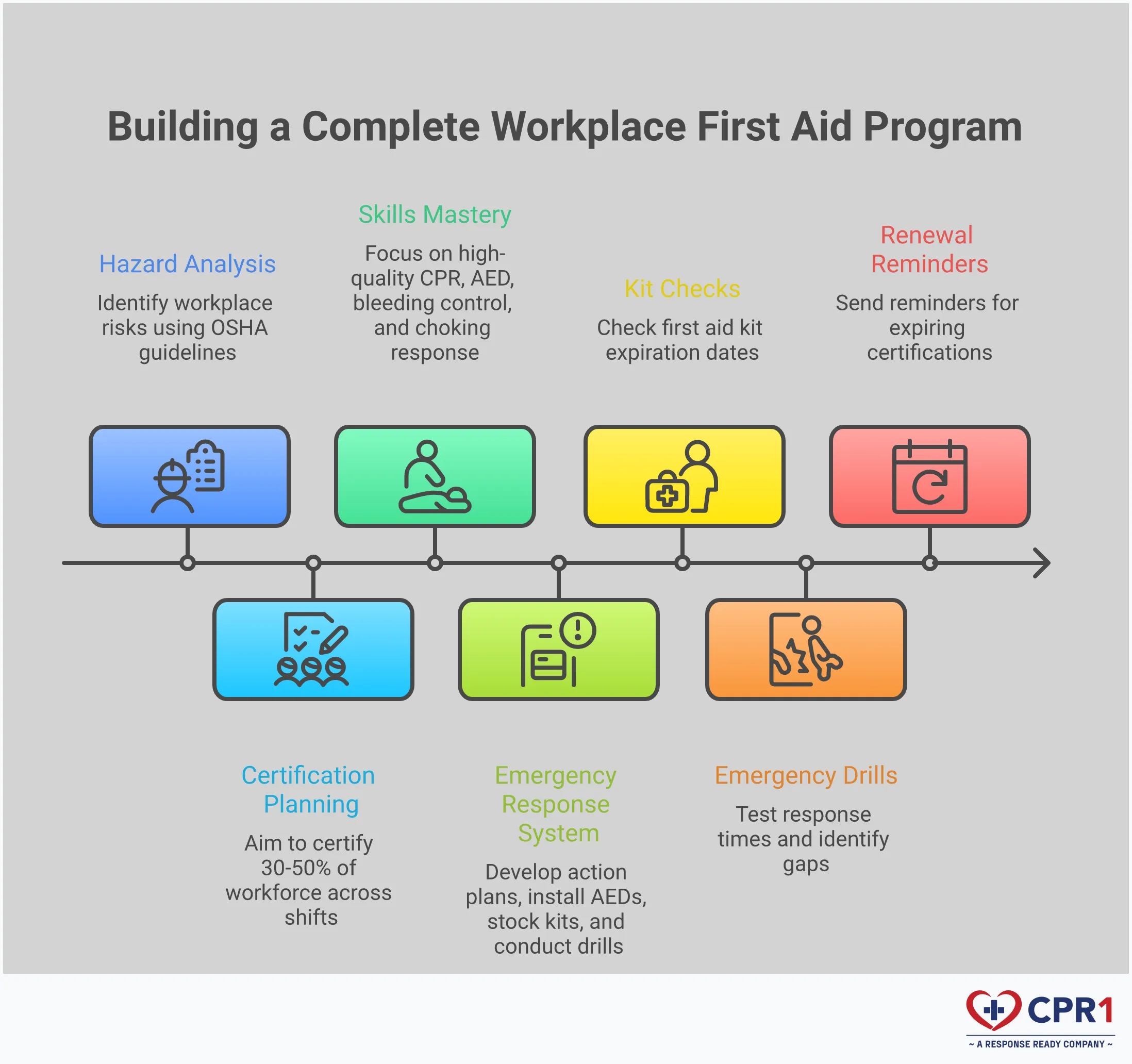
Your 3-Step Plan for Workplace CPR Certification
Getting a workplace first aid program off the ground is more than just checking a box. It’s about building a system that keeps your team safe and confident. By following a few straightforward steps, you can create a program that’s effective, compliant, and perfectly suited to your organization’s unique environment. It all starts with understanding your needs, getting the logistics right, and creating a clear plan for everyone to follow during an emergency.
Step 1: Assess Your Team’s Training Needs
Before you book any training, take a moment to assess your workplace. After all, organizations require different types of first aid training depending on the industry, workplace locations, and specific risks their employees are exposed to. A construction site has different hazards than a corporate office, and your training should reflect that reality. Conduct a simple workplace hazard analysis to identify potential risks. This will help you decide if your team needs specialized training like Bloodborne Pathogens for handling biohazards or Stop the Bleed for environments with a higher risk of traumatic injury. A tailored approach ensures your team learns the skills they’re most likely to use.
Step 2: Schedule Your Team’s Training
Once you know what training you need, it’s time to handle the logistics. For larger teams, onsite group training is often the most efficient and cost-effective option. It also allows the instructor to tailor scenarios to your specific workplace. As you get your team certified, remember to keep records of their certifications and when they will need to renew. Setting up a simple spreadsheet or using a dedicated management system can save you a lot of headaches. This ensures no one’s certification lapses, keeping your team prepared and your business compliant without any last-minute scrambling.
Step 3: Build Your Emergency Response Plan
Training gives your team the skills, but an emergency response plan tells them how to use those skills effectively. This plan is your roadmap for a crisis. According to OSHA, a good plan should include how to interact with the local EMS system and a current list of emergency telephone numbers accessible to all employees. Your plan should clearly outline who does what, where first aid kits and AEDs are located, and the specific steps to take for different emergencies. Make sure this emergency action plan is written down, posted in common areas, and reviewed with your team regularly.
Related Articles
Frequently Asked Questions
How many of my employees should be certified? While some regulations set a minimum number of trained responders, the safest approach is to have as many people certified as possible. Think about who is in the building during all shifts, including lunches and breaks. Relying on just one or two designated people creates a gap if they are unavailable or are the one needing help. Training a broad group of employees across different departments builds a resilient safety net and ensures someone is always nearby and ready to act.
Is an online-only first aid course sufficient for my team? While online modules are convenient for learning the theoretical parts of first aid, they can’t replace hands-on practice. Life-saving skills like performing CPR or using an AED require muscle memory and confidence that can only be built by physically practicing on a manikin under the guidance of an instructor. For this reason, we always recommend a blended course or a fully in-person session to ensure your team is truly prepared to act effectively in a real emergency.
My business is just a small office. Do we really need first aid training? Absolutely. Emergencies like sudden cardiac arrest, severe allergic reactions, or choking can happen anywhere, not just in high-risk industrial settings. Having a trained team shows your employees you are invested in their well-being and creates a safer environment for everyone, including clients and visitors. In any workplace, a quick and confident response can make all the difference while waiting for professional help to arrive.
How much time should we set aside for a training session? The time commitment depends on the course you choose. A comprehensive session covering First Aid, CPR, and AED skills typically takes about five hours to complete. More specialized courses, like Bloodborne Pathogens or Stop the Bleed, are usually shorter. A good training provider can help you understand the time needed for each course so you can schedule a session that minimizes disruption to your workday while maximizing the skills your team learns.
What’s the first step to setting up a program for my company? The best way to start is by evaluating your specific workplace. Consider the potential hazards your employees face daily and what kind of emergencies are most likely to occur. Once you have a clear idea of your needs, you can reach out to a training partner to discuss which courses are the right fit. This initial assessment ensures you build a program that is perfectly tailored to protect your team.