

A choking emergency is silent and happens in seconds. In that critical moment, the difference between panic and purposeful action comes down to one thing: training. It’s easy to assume you’d know what to do, but hesitation is a natural response to fear. A formal Choking Prevention Course is designed to build the muscle memory and confidence you need to act effectively. It turns uncertainty into capability. This guide breaks down how this training gives you the hands-on skills to clear an airway, recognize hazards, and create a safer environment for everyone around you.
Key Takeaways
- Proactive prevention is your best tool: Training teaches you to spot and remove common choking hazards in your environment, from modifying food textures to securing small household items, stopping emergencies before they start.
- Know how to respond immediately: A quality course provides clear, hands-on instructions for life-saving techniques like back blows and the Heimlich maneuver, giving you the confidence to act correctly when seconds matter.
- Fulfill professional and personal goals easily: Online training offers a flexible and affordable way to get certified, earn necessary Continuing Education Units (CEUs), and ensure your organization meets safety compliance standards.
Why Take a Choking and Aspiration Prevention Course?
Choking and aspiration prevention training is designed to give you the skills and confidence to handle a frightening emergency. It goes beyond basic first aid by focusing on how to recognize potential hazards, respond correctly when someone is choking, and implement simple strategies to prevent these incidents from ever happening. Think of it as a complete toolkit for safety, especially when you’re responsible for vulnerable individuals. This training teaches you how to create a safer environment, whether at home, in a school, or in a healthcare facility. By understanding the root causes and risk factors, you can proactively protect the people in your care.
Choking vs. Aspiration: Do You Know the Difference?
While they might sound similar, choking and aspiration are two distinct medical events. Understanding the difference is key to providing the right response. Choking happens when an object or food gets stuck in the throat or windpipe, completely or partially blocking air from getting to the lungs. It’s an immediate, life-threatening emergency that requires quick action.
Aspiration, on the other hand, occurs when food, liquid, saliva, or vomit is breathed into the lungs instead of being swallowed into the stomach. While it may not always cause an immediate blockage, aspiration can lead to serious health problems like pneumonia and other lung infections. Knowing how to recognize both is a critical part of providing effective care.
Is This Training Right for You?
This training is essential for anyone who cares for others, especially those working with populations at a higher risk. This includes healthcare professionals in hospitals and long-term care facilities, as well as staff in assisted living communities. It’s also incredibly valuable for teachers, daycare providers, and school staff who supervise children during meals and playtime.
Beyond professional settings, this course is perfect for parents, grandparents, and anyone caring for an older adult or a person with medical conditions that affect swallowing. Essentially, if you are in a position where you might need to provide first aid for choking, this training will give you the skills to act decisively and prevent emergencies before they start.
First Aid Fundamentals for Any Emergency
When an emergency strikes, it’s easy to feel overwhelmed. But no matter the situation—whether it’s a minor cut, a sudden illness, or a choking incident—a few core principles guide every effective response. These fundamentals are the foundation of all first aid, providing a clear, simple framework to follow when you need it most. Mastering them helps you stay calm, act logically, and provide the best possible assistance until professional help arrives. Think of these as your universal starting point, the essential knowledge that prepares you to handle the unexpected with confidence and care.
The Three Cs: Check, Call, and Care
One of the easiest ways to remember your priorities in an emergency is to follow the “Three Cs”: Check, Call, and Care. This simple sequence helps organize your thoughts and actions when stress is high. First, Check the scene for any immediate dangers to yourself or the victim, and then check the person’s condition. Are they conscious? Are they breathing? Next, Call 911 or your local emergency number. This step is critical because it gets professional help on the way as quickly as possible. Finally, Care for the person to the best of your ability and training until help arrives. This could mean performing back blows for choking, applying pressure to a wound, or simply reassuring them. This framework is a cornerstone of our first aid training programs.
Rule #1: Ensure the Scene is Safe
Before you do anything else, your absolute first priority is to make sure the area is safe for you and the injured person. You cannot help anyone if you become a victim yourself. This is the first part of the “Check” step, but it’s so important it deserves to be called the golden rule of first aid. Scan the environment for potential hazards like traffic, fire, downed electrical wires, or unstable structures. According to the National Health Service (NHS), assessing the scene for danger is the crucial first step in any first aid situation. If the scene is unsafe, do not enter. Call for professional help and wait for them to secure the area. Protecting yourself first ensures that you are in a position to provide effective aid once it’s safe to do so.
What Skills Will You Learn in a Choking Prevention Course?
A good choking prevention course moves beyond basic first aid to give you a complete framework for safety. You’ll learn how to spot risks before they become emergencies and gain the confidence to act decisively when seconds count. The training focuses on practical, real-world skills that you can apply at home, in the workplace, or in a care setting. It’s about building a proactive mindset to protect the people around you, whether they’re children, colleagues, or patients. By the end of the course, you won’t just know what to do in an emergency; you’ll know how to create an environment where one is less likely to happen in the first place.
Spotting Choking Hazards Before They Happen
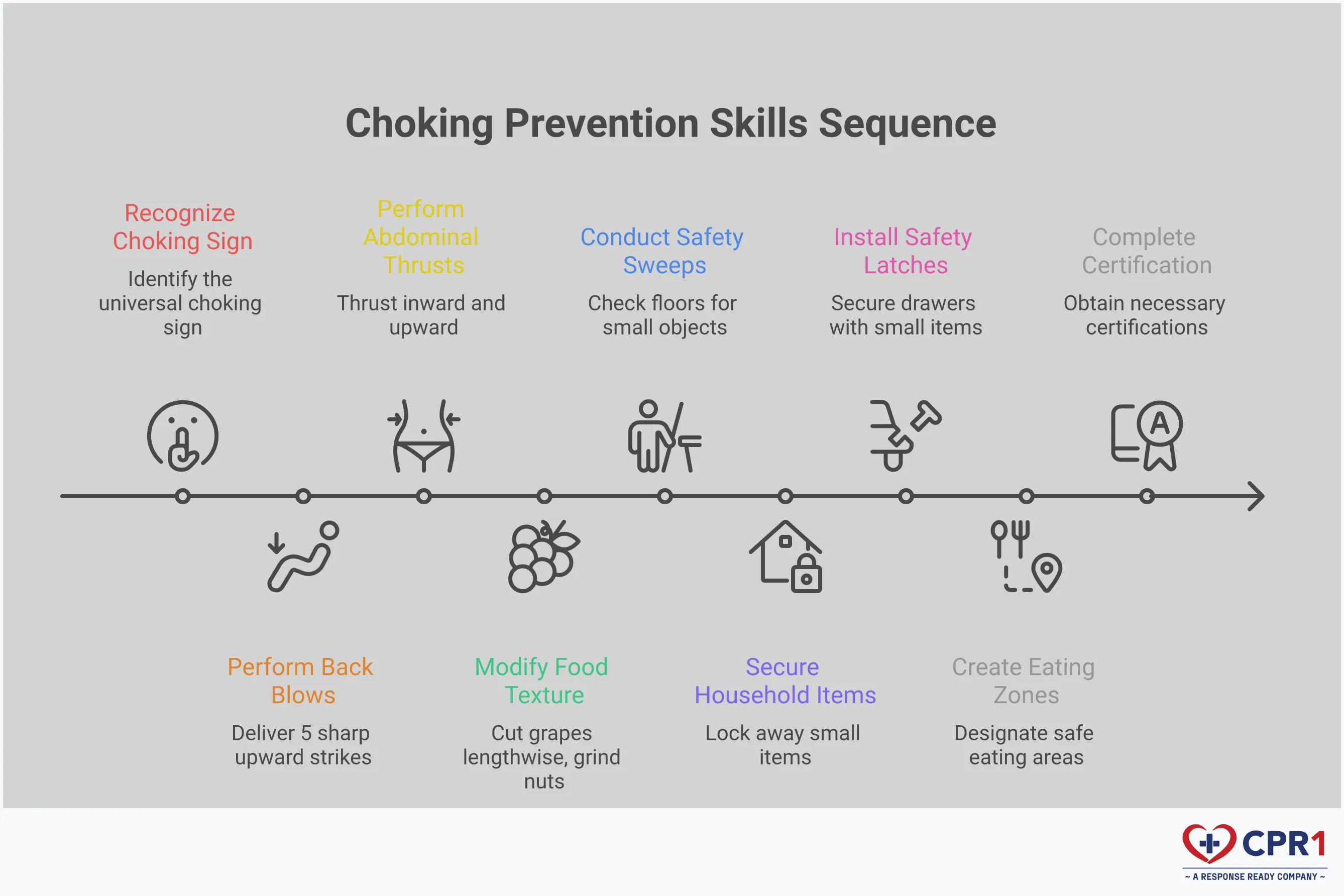
You’ll learn to see your environment through a safety-focused lens. This means getting good at spotting common choking hazards that often go unnoticed, from small toy parts to specific food textures dangerous for older adults. A comprehensive course teaches you how to assess any space, whether it’s a home, classroom, or workplace, and proactively manage potential dangers. This foundational knowledge is the first and most important step in preventing choking incidents before they can happen.
Recognizing the Signs of a Choking Emergency
Choking doesn’t always look like it does in movies. It can be quiet and easy to miss if you don’t know what to look for. The most important first step in any potential choking situation is to quickly assess whether the person’s airway is completely blocked or only partially. This assessment determines your next move. A person with a partially blocked airway needs encouragement to cough, while someone with a completely blocked airway needs immediate first aid. Learning to distinguish between these two scenarios is a core skill that allows you to respond with confidence instead of confusion, providing the right help at the right time.
Key Symptoms of Severe Choking
When someone is severely choking, their airway is completely blocked, and they cannot get enough air to breathe or speak. Look for the universal sign of choking: clutching the throat with one or both hands. They won’t be able to answer if you ask if they’re okay, and they may only be able to nod. Their attempts to cough will be silent or produce only a weak, ineffective sound. You might also notice a look of panic or terror in their eyes. As oxygen levels drop, their face and lips may begin to turn blue or gray. Without immediate help, they will lose consciousness. This is a true medical emergency that requires you to act fast.
Signs of Mild Choking
If a person is experiencing mild choking, it means their airway is only partially blocked. The most telling sign is that they can still make noise. They will likely be coughing forcefully, gagging, or wheezing between coughs. They may be able to speak in short phrases or gasp for air. While it’s a distressing situation, a strong cough is the body’s most effective way to dislodge an object. Your role here is to stay with them and encourage them to keep coughing. Don’t slap them on the back or interfere while they are actively and effectively coughing. You should, however, be prepared to act if their symptoms worsen and they are no longer able to breathe or cough.
What to Do in a Choking Emergency
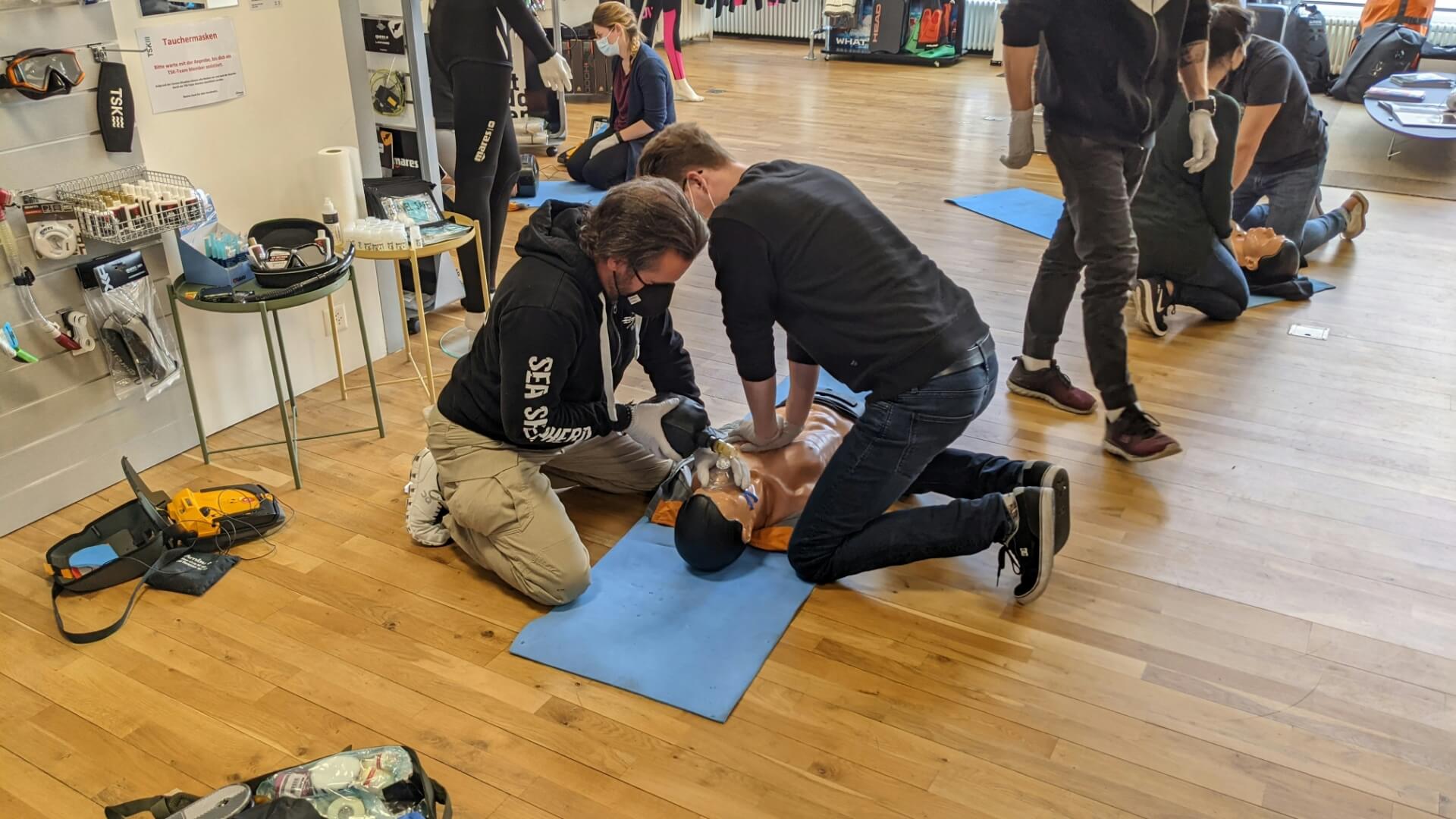
Knowing how to react in the first few seconds of an emergency can make all the difference. This training is all about action. You’ll learn to recognize the universal sign for choking and other indicators that someone can’t breathe. You’ll then practice the hands-on techniques for clearing an airway, including back blows and abdominal thrusts (the Heimlich maneuver). A quality course also covers the critical modifications needed when helping infants and children. The goal is to build confidence so you can provide effective first aid without hesitation.
First Aid for a Choking Adult or Child
If you see an adult or child who can’t cough, speak, or breathe, it’s time to act fast. The go-to method is a “five-and-five” approach. Start by giving five firm back blows right between their shoulder blades using the heel of your hand. Then, switch to five abdominal thrusts, also known as the Heimlich maneuver. To do this correctly, stand behind them and wrap your arms around their waist. Make a fist with one hand, place the thumb side just above their belly button, and grab your fist with your other hand. Give a quick, upward thrust into their abdomen. Keep alternating between five back blows and five abdominal thrusts until the object comes out or help arrives.
First Aid for a Choking Infant
Responding to a choking infant requires a different and more gentle approach. It’s crucial to never perform abdominal thrusts on a baby under one year old. Instead, securely hold the infant face-down on your forearm, using your thigh for support. Make sure their head is positioned lower than their chest to let gravity help. With the heel of your hand, give five firm but gentle thumps on their back, right between the shoulder blades. If that doesn’t work, carefully flip the infant over onto your other forearm. Place two fingers on the center of their chest, just below the nipple line, and provide five quick chest compressions. Continue this cycle of five back thumps and five chest compressions until the baby can breathe again.
How to Handle Special Situations
Sometimes, you can’t perform standard abdominal thrusts, especially if the person is pregnant or has a larger body that you can’t wrap your arms around. In these cases, you’ll need to adapt your technique by using chest thrusts. Instead of positioning your hands on the abdomen, move them up to the center of the person’s chest, at the base of their breastbone. From there, deliver firm, inward thrusts. The goal is the same: to use the air in their lungs to force the object out. Knowing how to handle these variations is a core part of being truly prepared, which is why comprehensive first aid training is so important.
What to Do if You Are Choking Alone
It’s a scary scenario, but it’s possible to choke when you’re by yourself. If this happens, the first thing to do is call 911. Even if you can’t speak, leave the line open so emergency services can trace your location. Next, you can perform abdominal thrusts on yourself. Make a fist and place it just above your navel. Use your other hand to grip your fist, then bend over a hard surface like a countertop or the back of a chair. Forcefully shove your fist inward and upward. This action can generate a strong enough cough to clear your airway and dislodge the object.
When a Choking Person Becomes Unconscious
If a person who is choking loses consciousness, the emergency has become more severe. Gently lower them to the floor on their back. Open their mouth and look for the object. If you can clearly see it and reach it, carefully sweep it out with your finger, being cautious not to push it deeper. If you can’t see it or the person isn’t breathing, you need to begin CPR immediately, starting with chest compressions. The force of the compressions can sometimes be enough to dislodge the blockage. Continue performing CPR until the person starts breathing or medical professionals take over.
When to Call 911 and Why Post-Incident Care Matters
Knowing when to call for help is just as critical as knowing the first aid steps. Call 911 right away if someone is choking and your initial efforts aren’t working, or if they lose consciousness at any point. Paramedics need to be on their way as soon as possible. Also, remember that the response doesn’t end once the object is out. Anyone who has experienced a severe choking episode should seek a medical evaluation afterward. The force from back blows or abdominal thrusts can occasionally cause internal injuries, so a medical check-up is an important final step to ensure their safety and well-being.
Simple Prevention Strategies for Everyday Life
Effective prevention is about creating systems for safety, and this training shows you how to do that in any setting. At home, this might involve new rules for mealtimes and keeping small items away from children. In a school, it could mean implementing safer snack policies and toy-check procedures. For healthcare professionals, you’ll learn about creating feeding plans that protect vulnerable patients. The course teaches you to think like a safety expert, helping you establish routines that significantly reduce the risk of a choking event ever happening.
How to Prepare Food and Feed Others Safely
This module is crucial for anyone caring for young children, the elderly, or individuals with medical conditions affecting swallowing. You’ll learn practical skills for modifying food to make it safer, including techniques for cutting and pureeing foods to the right consistency. You’ll also cover best practices for feeding, such as ensuring the person is sitting upright and taking their time. The training emphasizes supervision during meals to create a calm environment. These safe swallowing strategies are simple to implement but have a major impact on preventing food-related choking.
How to Choose the Best Online Training Program
With so many online courses available, it can be tough to figure out which one is worth your time and investment. The best programs are more than just a series of videos; they are designed to build real skills and confidence. A quality course should be clear, engaging, and created by certified professionals who understand how to teach life-saving techniques effectively. When you’re looking for training, focus on programs that are not only comprehensive but also flexible enough to fit your schedule.
The goal is to find a course that gives you practical knowledge you can use immediately. Look for training that clearly outlines its learning objectives and is transparent about its certification process. Whether you’re a healthcare worker needing to fulfill a requirement or a new parent wanting to be prepared, the right program will equip you with the ability to act decisively in an emergency. It’s about finding a balance between thorough instruction and a format that respects your time.
Your Checklist for a Quality Online Course
A great online course should be easy to access and use, no matter your technical skill level. Check if the program works on different devices, like your phone or tablet, so you can learn whenever you have a spare moment. It’s also helpful when training providers offer downloadable or printable resources. Having a quick reference guide you can post on a bulletin board or keep in a binder allows you to review key steps without logging back into the course. This kind of support shows the program is designed to accommodate different learning styles and helps the information stick.
What Should the Course Curriculum Cover?
The best training gets straight to the point without sacrificing critical information. An effective course should be concise, teaching you how to identify choking hazards and reduce risks in your specific environment. It should start with foundational knowledge, like the difference between choking and aspiration, before moving on to response techniques. Many professional courses also offer Continuing Education Units (CEUs), which is an important feature for healthcare providers and other professionals who need to maintain their licenses. Look for a program that clearly states what you will learn and how long it will take to complete.
Why Choose a CPR1.com Course is Your Best Choice
When a choking emergency happens, knowing the right steps can save a life. That’s why choosing a certified training program is so important. Our courses go beyond basic prevention tips and teach you essential, hands-on skills. As experts from the Mayo Clinic emphasize, learning techniques like the Heimlich maneuver and CPR is critical for responding to a choking incident. At CPR1.com, our training is developed and taught by certified instructors with real-world experience. We focus on building your confidence so you can stay calm and act effectively when it matters most.
All About Certifications and CEU Credits
Beyond learning a critical skill, choking prevention training often fulfills important professional requirements. For many in caregiving, healthcare, and education, this certification isn’t just a good idea; it’s a necessity for staying licensed, compliant, and ready to act. Let’s break down what these certifications mean for you.
Fulfilling Your Job’s Certification Needs
Many jobs, especially in healthcare and childcare, require specific safety certifications. Choking prevention training is often on that list. Completing a course can help you satisfy state-specific rules or meet your employer’s internal safety standards. Think of it as a key part of your professional toolkit, one that keeps you qualified for your role while giving you the confidence to handle a high-stakes situation. Our onsite group training is perfect for ensuring your whole team meets these requirements.
How to Earn CEU Credits with Your Training
If you work in a licensed profession like nursing or long-term care administration, you likely need to earn Continuing Education Units (CEUs) to maintain your credentials. A choking prevention course is a practical way to get those credits. These courses often offer a set number of CEUs upon completion, allowing you to learn a life-saving skill while checking off a box for your professional development. It’s a win-win that keeps your knowledge current and your license active.
Does This Training Meet OSHA Standards?
For businesses, safety training is a cornerstone of OSHA compliance. Having your team trained in choking prevention is essential, particularly in environments like restaurants, schools, and long-term care facilities. This training not only protects your clients and employees but also helps your organization meet federal and state safety regulations. Proper certification demonstrates a commitment to safety and is a crucial part of your workplace emergency action plan.
Why Course Accreditation Matters
When a course is accredited, it means a professional organization has reviewed its content and confirmed it meets high standards for quality and accuracy. For example, an accreditation from a group like the National Association of Long Term Care Administrator Boards (NAB) is a strong signal that the training is respected within the industry. Always look for accredited programs when choosing your training. This ensures the certificate you earn will be recognized by employers and licensing boards, confirming that your time and investment result in a credible, valuable credential.
How Much Does an Online Choking Prevention Course Cost?
Investing in life-saving skills shouldn’t break the bank, and thankfully, online choking prevention training is both accessible and affordable. Whether you’re a new parent, a healthcare professional needing certification, or a manager outfitting your entire team, there’s a cost-effective option available. The price often depends on the course length, the provider, and whether you’re signing up as an individual or part of a group. Think of it as a small investment that pays huge dividends in confidence and preparedness. When someone is choking, every second counts, and having the right knowledge is priceless. Let’s look at what you can expect to pay.
Breaking Down the Cost for Individuals
For individuals, online choking prevention courses are incredibly budget-friendly. You can often find high-quality training for the price of a couple of coffees. For example, a 30-minute awareness course can cost as little as $10. Longer, more in-depth courses that last about an hour are frequently available for the same low price. Many of these programs also offer Continuing Education Units (CEUs), which is a great benefit for professionals in fields like healthcare and childcare who need to maintain their licenses. This low cost makes it easy for anyone, from babysitters to concerned family members, to gain essential skills without a significant financial commitment.
Save Money with Group and Corporate Rates
If you’re training a team, you can expect even better value. Most training providers offer discounts for group registrations, making it simple for businesses, schools, and other organizations to get everyone certified. These discounts are often tiered, so the more people you enroll, the more you save. For instance, you might see a 10% discount for enrolling two to five people and a 20% discount for six to ten. For larger groups of 11 or more, you can usually arrange special pricing directly with the provider. This makes it easy to manage your training budget while ensuring your entire staff is prepared for an emergency. It’s an efficient way to handle your organization’s workplace safety training.
How to Enroll and Pay for Your Course
Getting signed up for a course is designed to be a quick and simple process. Typically, you just need to visit the course page, select the number of people you’re enrolling, and add it to your cart to complete the purchase. For organizations managing multiple learners, many providers offer a streamlined group registration option using a “Facility Key” or a similar code. This lets your team members sign up individually under the company’s account without having to handle payments themselves. The goal is to get you from checkout to learning in just a few minutes, so you can focus on gaining the skills that matter.
Ready to Get Started? Here’s How
Taking the first step toward getting certified is often the hardest part, but we’ve made our online training process as simple as possible. You don’t need any special technical skills or equipment to get started. All you need is a desire to learn life-saving skills and a reliable internet connection. Our courses are designed for busy people, allowing you to learn at your own pace from the comfort of your home or office.
Whether you’re an individual looking to be prepared for emergencies, a caregiver needing certification, or a safety manager organizing training for your entire team, the path is the same. We’ll guide you through each step, from finding the right course to downloading your final certificate. Think of it as a straightforward journey to becoming more confident and capable in an emergency. Let’s walk through exactly what you can expect when you sign up.
How to Register in Minutes
Getting enrolled in one of our online courses takes just a few minutes. Start by exploring our online training options to find the program that fits your needs, whether it’s for choking prevention, First Aid, or CPR. Once you’ve selected your course, simply add it to your cart and proceed to checkout. You’ll be prompted to create a secure account, which will become your personal portal for accessing course materials, tracking your progress, and retrieving your certificate. The entire process is designed to be intuitive, getting you from sign-up to learning in no time.
What You’ll Need Before You Start
You don’t need much to start your training. The essentials are a computer, tablet, or smartphone and a stable internet connection. Our courses are self-paced, so you can fit them into your schedule whenever you have a free moment. We recommend finding a quiet space where you can focus without interruptions. Beyond that, just bring an open mind and a willingness to learn. The course itself provides all the information, videos, and quizzes you need to master the material and feel prepared for real-world situations.
Getting Your Official Certificate
Once you successfully finish your course and pass the final quiz, your certificate is immediately available. You can download, save, or print it directly from your account portal. This certificate serves as official proof of your training and is a valuable addition to your professional credentials. For those in healthcare or related fields, many of our courses are approved for Continuing Education Units (CEUs), helping you meet your licensing and career advancement requirements. Your certificate is more than just a piece of paper; it’s a testament to your commitment to safety and preparedness.
Related Articles
- Infant Choking: Red Cross Back Blows & Chest Thrusts
- Choking Help for Large Adults: Step-by-Step Guide | CPR1, LLC
- Choking Person Too Large? Use This Technique
- Infant Choking CPR: Steps, Prevention & Certification | CPR1, LLC
Frequently Asked Questions
Is this training the same as a full CPR or First Aid course? While there is some overlap, choking prevention training is a specialized course that focuses specifically on recognizing hazards, preventing incidents, and responding to a blocked airway. A full First Aid or CPR course covers a much broader range of emergencies, including cardiac arrest, bleeding, and shock. Think of this as a deep dive into one critical topic, making it a great supplement to general first aid knowledge or a perfect starting point if your main concern is safety during meals or playtime.
How long will my certification be valid? Most safety certifications, including those for choking prevention, are typically valid for two years. This standard ensures that your skills stay fresh and up-to-date with the latest guidelines. After your certificate expires, you can easily renew it by taking a refresher course, which is often shorter than the initial training.
Can I really learn life-saving skills from an online course? Absolutely. A well-designed online course uses clear video demonstrations, interactive quizzes, and detailed instructions to teach you the proper techniques for responding to a choking emergency. While it doesn’t replace an in-person practice session, it gives you the foundational knowledge and confidence to act correctly. Our courses are created by certified professionals to ensure you learn the exact steps needed to handle a real-world situation effectively.
I’m not a healthcare worker. Is this course still right for me? Yes, this training is designed for everyone. While it meets professional requirements for healthcare and childcare workers, it is equally valuable for parents, grandparents, babysitters, and anyone who wants to be prepared. The course avoids overly technical jargon and focuses on practical, easy-to-follow steps that anyone can learn and apply to make their home and community safer.
What happens after I finish the course and get my certificate? Once you receive your certificate, you can download and print it for your records or to provide to an employer. More importantly, you will have the confidence and knowledge to create a safer environment and respond effectively in an emergency. We recommend reviewing the key steps periodically and keeping a printed guide in an accessible place, like on your refrigerator or in your first aid kit, to keep the information top of mind.